4 Common Indications a Tree Is Posing a Safety Risk
A damaged or declining tree can become a serious safety hazard. Problems involving the trunk, branches, roots, or overall stability can increase the likelihood of falling limbs or complete tree collapse. Recognizing warning signs early gives property owners an opportunity to have the tree professionally evaluated and address potential hazards before someone gets hurt or property is damaged. At Bassett Tree Service, we provide expert hazardous tree removal in the greater Mesa, AZ area. Here are four warning signs that a tree may be posing a safety risk.
Cracks in the Trunk or Major Limbs
Deep cracks or splits in the trunk or large branches may indicate that the tree's structure has been weakened. Cracks can develop because of issues such as storms, heavy loads, and disease. Some cracks may worsen over time and increase the likelihood of a branch or trunk splitting. Because structural damage can be difficult to evaluate from the ground, professional assessment is recommended when significant cracks are present.
Significant Leaning
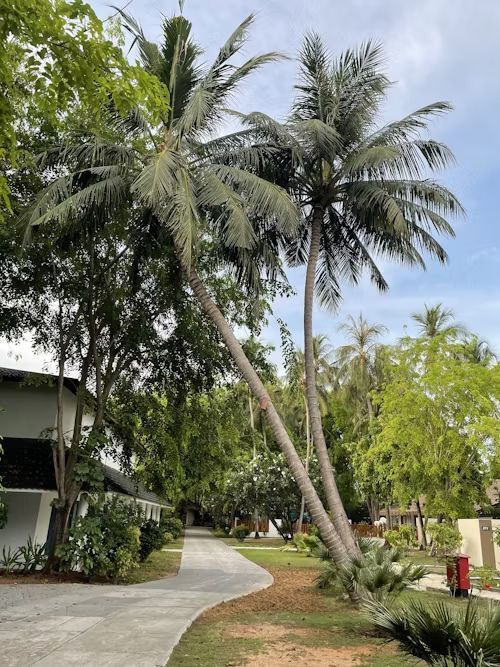
A tree that has developed a new or worsening lean may be at increased risk of falling. While some trees naturally grow at an angle, sudden changes in the direction of growth can indicate root damage, soil movement, or structural instability. A tree leaning toward a home, parking area, walkway, or other frequently used space deserves prompt professional attention.
Large Dead Branches
Dead branches can become brittle and break suddenly, particularly during stormy weather. Large dead limbs located over driveways, sidewalks, patios, or structures are especially concerning. Hanging or partially broken branches can also fall without much warning. Regularly inspecting the canopy and having hazardous limbs professionally removed can reduce the risk of falling branches.
Signs of Decay or Disease
Fungal growth, cavities, peeling bark, unusual discoloration, and significant areas of dead wood can indicate decay or disease. Internal deterioration may weaken the tree even when the exterior appears relatively intact. If decay is affecting major structural portions of the tree, the risk of collapse may increase. An experienced arborist can evaluate the tree and determine whether pruning, treatment, monitoring, or removal is appropriate.
Tree Removal in Mesa, AZ
For
expert tree removal in Mesa, AZ and the surrounding area, contact Bassett Tree Service at
480-745-2290. Feel free to give us a call to request an arborist estimate in Mesa, Phoenix, and the surrounding area!